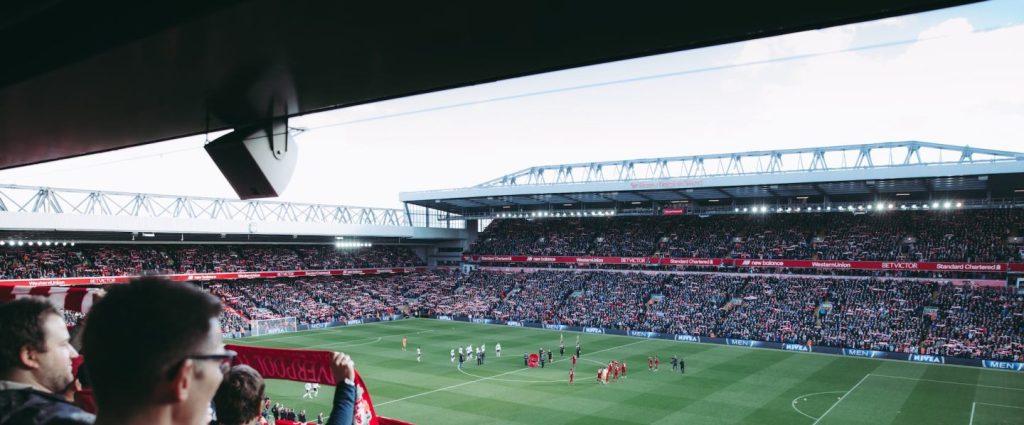
For the first time in ten seasons, Liverpool start a new campaign without Jurgen Klopp at the helm. The man who replaces him is Arne Slot. The forty-five-year-old enjoyed a successful stint with Feyenoord, bringing home the Ederdeivise title, ending a seven-year drought. Despite this track record, it was still a rather unexpected appointment. Let’s not forget the never-ending Xabi Alonso. Ultimately Europe’s most promising manager chose to stay at Bundesliga Champions Bayer Leverkusen. Just a year after Europe’s most promising player rejected the Anfield experience for the Los Blancos sun.
Taking over from a man of Jurgen Klopp’s status will be no easy feat for Arne Slot. History teaches us that it’s a tough act to follow. A look at Manchester United post-Ferguson depicts just that. Plus, Unai Emery’s spell at Arsenal following Arsene Wenger’s departure. The Spaniard inherited a poison chalice and lasted just over a season.
Yet, Jurgen Klopp has left Liverpool in a better place than when he came. He spoke eloquently during his first press conference in Merseyside ” It’s not important what people think when you come in, it’s much more important what people think when you leave.”
Arne Slot has a youthful and vibrant squad at his disposal. It’s over to him to mold this group into his image.
Striking a balance between implementing your own style and adapting to the tools at your disposal is no easy task. Often managers will take over from a struggling predecessor, not one who has excelled. Therefore, change is needed and a new outlook is welcomed with open arms.
Replacing one of the most successful bosses to lead the club in history is a different matter. Should Slot change operations and there isn’t instant success, he will find himself the subject of intense criticism. Why fix what wasn’t broken? On the other side, if there isn’t much noticeable change he’ll be accused of “lacking identity”.
The only way to prevent criticism is success. Even then, some will still complain.
The Positives of Last Season
It’s easy to forget how fragile a situation Liverpool found themselves in last Summer. After one of the most disappointing seasons in Jurgen Klopp’s tenure, a rebuild was underway. While the forward line had experienced considerable modifications, the midfield needed a makeover. Big money moves to Saudi Arabia for Fabinho and Jordan Henderson only furthered the cause.
While the linked names for much of the transfer window were Moises Caicedo and Romeo Lavia, both chose to represent Mauricio Pochettino’s Chelsea. In came Dominik Szoboszlai, Alexis Mac Allister, Ryan Gravenberch and Waturo Endo for a combined fee of £145 million.
Such drastic changes always come with great risk. If the replacements aren’t of sufficient quality, there’s no turning back. With long-term deals and healthy contracts, it can take multiple seasons to recover. Just look at Manchester United and Chelsea in recent years.
The profile of player had changed for the Reds which meant that the tactics had to follow. The likes of Henderson, Fabinho and Wijnaldum (traditionally work-men-like midfielders) all exited meanwhile the incoming replacements’ strengths were more from a creative standpoint. This isn’t by accident. The previous midfield would supply the Salah-Firminio-Mane front three. Klopp recognised this creativity would need to be replicated by the new midfield, as the forward line to put it bluntly: aren’t as strong.
Another change was Trent-Alexander Arnold moving into an inverted role. The English international created a double pivot with the number six while the two number eights in front created a box shape in possession. This revolutionised Liverpool’s build-up process. Less of an ownness was placed on the fullbacks to create, that was the midfield’s job. There were familiarities as well. The trademark right-hand side triangle remained, all be it with Alexander-Arnold in a more central role. Therefore, Mohammed Salah stayed wider to retain much-needed width in attack. This was shown perfectly in a goal away to Manchester City.
Last Season fragilities
Despite playing scintillating football for large periods of the season, the Reds failed to sustain a title challenge. One major reason was the lack of control they established in games.
All too they often found themselves behind, leaving themselves with an uphill battle Sure, they would often produce late goals, so much so that they were branded the “comeback kings.” It made for scenes of euphoria at home to Fulham, away at Crystal Palace, a trip to Nottingham Forrest, and the list goes on. The reality was that it lacked sustainability. If anything, it papered over some cracks.
Over the course of the thirty-eight-game league season, Liverpool trailed in seventeen games (45%). However you put it, that simply isn’t title-winning form. Rivals Manchester City and Arsenal’s rate was much lower at twelve (32%) and ten (26%). It created this feeling that Liverpool were dangling on for dear life while the other two breezed ahead/
We can draw a range of complex conclusions, but sometimes the simple truths are important. An undeniable factor of the run-in downfall was fatigue. Klopp’s played such a physically taxing and intense game. They counter-pressed in packs, never letting off for ninety minutes. Pair that with the emotional wear that Jurgen Klopp’s approaching retirement produced plus a lengthy injury list. It’s little surprise that performance levels dropped.
To claim it was a “bottle-job” ignores this obvious context.
On the other hand, there were clear weaknesses from a tactical point of view. The Liverpool midfield was vulnerable out of possession. They would counter-press with great energy but the risk posed when they failed to win the ball back in the first stage. It leaves space for teams to exploit. Particularly with the lack of a traditional back four in defence. This was shown no more so than when Gasperini’s Atalanta rocked up to Anfield.
In previous years, Fabinho sweaped up any mess that escaped the press. Endo and Mac Allister just aren’t quite as strong at the dirty side of the game.
Plus, it could be argued Jurgen Klopp showed too much loyalty to a select few. The likes of Ryan Gravenberch and Harvey Eilliot churned out many positive performances but were starved of consistent game time. It did feel as though it was a closed door for some.
Jury out on some
To entirely blame the midfield would be unfair though. Whether Liverpool have adequately revolutionised their forward line remains an unknown.
Mohammed Salah is the last man standing from the famous front three – and is the only one of the current crop who is a nailed-down starter.
Darwin Nunez has shown promise at times, although over two seasons hasn’t lived up to the hefty price tag of £80 million. He brings energy and power, but as a forward simply isn’t clinical enough. In the league last season he posed an expected goals of nineteen but managed just eleven. Elite-level strikers outperform their XG, this is an area he must improve.
Since his injury at the start of the 2022/23 season, Luis Diaz has yet to reach the heights of his early days as a Liverpool player. If there was one performance which summed him up perfectly it was a 1-1 draw with Manchester City at Anfield. The Columbian was courageous, excellent in one-on-one scenarios and provided never-ending legs in the press. Simultaneously, he squandered chance after chance, frustrating terribly with end product.
Cody Gakpo has excelled largely throughout his one-and-a-half seasons at Liverpool. The only dilemma is the lack of understanding regarding his favoured position. The Dutchman played as a striker, right-winger, left-winger and midfielder at various points throughout the season. It feels as though the best option for his development will be to nail down one role and flourish in that.
Finally, there is Diogo Jota. The only drawback with the twenty-seven-year-old is fitness. His movement and poaching instincts are the best at the club. However, a few months a season on the treatment table has become somewhat of a regular occurrence.
Uncertain futures
Before the topic arises of bolstering the squad, Liverpool have the major task of tying down Trent-Alexander Arnold, Virgil Van-Dijk and Mohammed Salah to long-term contracts.
Last season the influence of Trent Alexander-Arnold was massive. With captain Jordan Henderson leaving, the scouser was promoted to the role of assistant captain and embraced every second of it. The twenty-five-year-old produced late strikes against Fulham and Manchester City to keep his side fighting at the summit at the back end of 2023.
The need to extend Virgil Van Dijk’s stay is plain for all to see. The Dutchman’s presence calms the backline plus those in the stands. In short, Liverpool are a better team with him in it. They can’t afford to lose their second captain in as many seasons.
Mohammed Salah’s future is slightly more of a dilemma, especially after a big money move to Saudi was rumored as recently as last January. For a reported fee of £200 million, that could provide great value to strengthen elsewhere in the team.
The Egyptian will go down as a Liverpool legend, but sentiment will have to be tossed to the side. At thirty-two years old, he will have seen his best days. It may hurt in the short term as it’s a lot of goals to replace, but from a forward-planning perspective, it makes great sense.
Arne Slot’s tactics
The Reds have already played their first game with Arne Slot in the dugout beating Real Betis by one goal to nil. Even at the early stages of pre-season, there was a lot to comment on from a tactical perspective.
Firstly the pace of the play was different. The back four were much more patient on the ball looking to attract the press of Real Betis. It was unusual to see from a Liverpool team. Only time will tell how the spectators buy into this change as Jurgen Klopp had instilled a set of beliefs that harmonised around Anfield. The way they played football identified with the Liverpudlian people.
The use of the fullbacks was also worthy to note. Connor Bradley and Kostas Tsimikas took up largely traditional positions, neither inverting nor overlapping. It was up to Salah and Carvahlo on the wings to create the width.
The midfield and forward-line setup was intriguing but rather irrelevant. Slot lined up with a double pivot and two number ten’s instead of using a traditional striker. This was out of necessity rather than choice as Diogo Jota, Darwin Nunez and Cody Gakpo didn’t travel with the group to the USA. So while we could discuss patterns all day, it’s not representative of what to expect in the coming season.
The same could be said about the fullbacks in all honesty. Perhaps a fully-firing Trent Alexander-Arnold and Andy Robertson may be used differently. It’s the beauty of pre-season: unknown relevance,
Transfer targets
It’s been all quiet on the transfer front. As August approaches, Liverpool are still to put pen to paper on a single deal. Slot explained that when you have a high-quality squad finding options that improve your team is more difficult, so it’s a case of waiting for the “right one.” Of course, this is true. There is no point in adding numbers for the sake of it.
Nonetheless, with the emphasis that Slot places on his midfield, another option as a number six would be welcomed. This would allow Mac Allister to play a more advanced role.
A centre-back should also be high on the priority list. With Joel Matip heading his separate ways and Joe Gomez’s future unclear another option would do nicely. Preferably a left-footer for balance, although they are scarce and don’t come on the cheap.
Finally, another forward may be required. With Darwin Nunez largely underwhelming over his Liverpool stint a proper goal-scorer to lead the line is what the doctor orders.
Expectations
Retaining Champions League football is a must. As unfortunate as it is, Liverpool have already lost some of their pull power with Jurgen Klopp heading his separate ways. Therefore they must continue to establish themselves as one of England’s top dogs. While there will always be an inner desire to challenge for the title, so early in the Slot-era that isn’t essential. As long as the blueprints of a series contender are there for the coming seasons, most will be satisfied.
Then there are the elements that are non-results-based, processes if you like. The style of football will be scrutinised. Does it entertain? Can it be picked apart easily? Do the players enjoy it?
Already Curtis Jones has voiced his excitement to adapt to a new way of playing. He told LiverpoolTV “The centre-mids were always lads who were runners and more disciplined. The principles are the same, but I feel that now the centre-mids are going to be more the heart of the team. It’s probably the happiest I’ve been in terms of a style of play that suits me and the lads that we have in our team. I feel this is more me. I can get on the ball more, I can do me more”
Transfers will also be important. No matter how good a coach you are if the recruitment is poor you will find yourself on a hiding to nothing.
All together it’s the bigger picture stuff, the non-tangibles. The vibe around the club, the feel-good factor and the momentum. Things which Slot can indirectly affect but not assess.
Either way, it’ll be a fascinating journey for a club that finds itself discovering a new identity. How strange Liverpool without Jurgen Klopp still seems.

 Beyond The Score
Leave a comment