In the ravenous world of sport, it’s clear that we are heading in one direction. More, more, more. More build-up, more coverage, and more action. The days of a proper off-season in football are long a thing of the past. An already frenzied schedule including an unprecedented amount of action, is only set to ramp up further. International football is busier than ever thanks to the Nations League addition. While on the club side, the Champions League format will expand in 2024, increasing the number of teams and matchdays. Not to mention, a revamped club world cup is around the corner meaning yet again… more action.
Formula One has a similar problem. The 2023 calendar includes twenty-four races -more than ever – and new sprint formats mean a jump in competitive sessions but less preparation time. Even darts has witnessed a similar trend, with more world series events than ever, European tour events now being televised, and the increasing necessity of being on the tour week after week.
Tennis is not immune from this in any shape or form. In reality, as a sport, the issue is steeper. Two gruelling weeks at Wimbledon have just parted, yet rest bite does not exist, not even for a week. Instead, we open the way for a triple header of clay events. It’s exhausting for a spectator, never mind a player. Just make it make sense.
Tennis never stops, which is an issue in itself. Though, if the hectic schedule wasn’t so lopsided, it could be easier accepted. The ATP calendar for this season includes nine masters events, six of which are indoor or outdoor hard, the other three being on the clay. Notice an absence of grass?
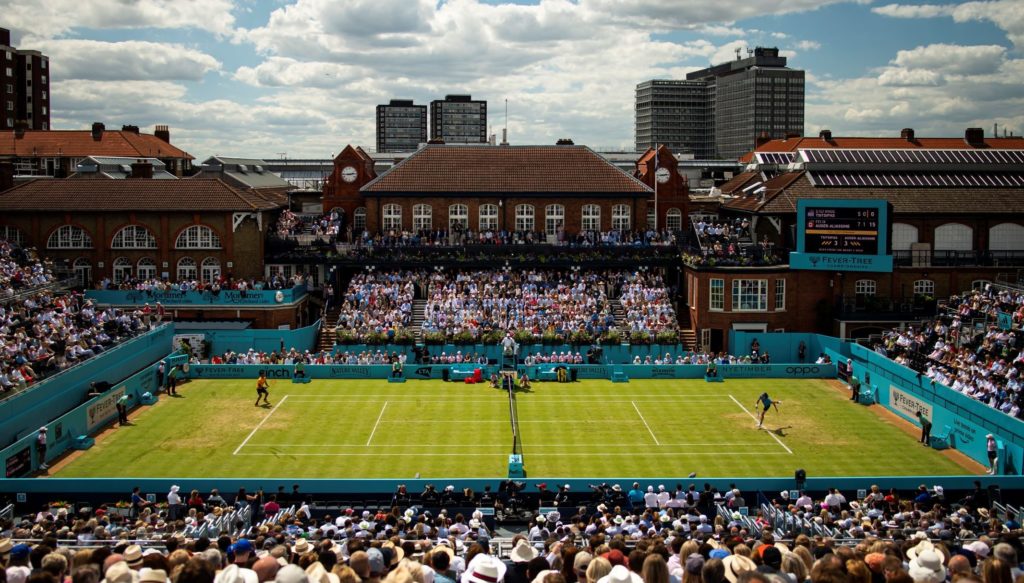
Of the thirteen ATP 500 events, just two are grass, and with both occurring simultaneously, only one can be entered. Of the thirty-eight ATP 250 events, just five are on the grass. Grass events are scarce and just a footnote in the season.
So why on earth the illogical spread? It really is a case of tennis shooting themselves in the foot, once again. Grass court specialists have a right to be ticked off. They are being put at a disadvantage for no logical reason.
They are granted little time to show off their skills in a six-week window through June and July. No such concern though for a clay specialist. The clay season is packed with tournaments in Spring, plus a few after the Australian Open, and a month or after Wimbledon.
Not to mention that grass courts nowadays are a different beast from the ones of old. Slower in pace and higher in bounce, after a couple of days of action the play is more like a hard court. The art of quick-fire tennis is being drained out in front of our very own eyes.
Last year ATP President Andrea Gaudenzi claimed : “A grass Masters makes sense, especially in the large and important market of Germany, which was the number one tennis market in the 1990s.”
Tell us something we aren’t aware of. Of course, it makes sense, yet no real effort has been made to adjust since those comments.
There is quite often a snobbery around grass court tennis. Big-hitting servers at the forefront, shorter rallies, and lower bounces. At times it isn’t pretty, yes, but it requires a different set of skills. Tennis is a multi-dimensional sport, and diversity in styles is essential for the spectacle.
I can’t help but feel it ruins Wimbledon to an extent as well. We see players at the top of the seeding charts who on the grass courts of SW19, just aren’t up to the billing.
On the men’s side, the likes of Casper Ruud and Stefanos Tsitsipas ring a bell, while on the WTA tour, world number one Iga Swiatek is the prime example. Ruud, who took up seed number four for this year’s event, barely took the grass swing seriously. Instead of playing build-up tournaments, he went to concerts. He declared grass tennis is for “golf players” so had a swing with Taylor Fritz the week before. Iga Swiatek who has been dominant on every other surface yet again had a disappointing fortnight. The Pole reached the second week at her fourth attempt but failed to escape a quarter-final clash with the world number twenty Svitolina. The fact that the world’s number one and dominant force doesn’t need to be able to master one of our three surfaces on tennis just doesn’t sit right.
We can’t blame the individuals. For Swiatek to master the grass, she would likely have to change her stroke production, particularly on the forehand wing. On the men’s side Casper Ruud for example, would have to do the same. What is change worth? Why on earth would you sacrifice your game on other surfaces to suit grass when there aren’t the same ranking points or prize money to earn annually? The grass season isn’t as respected, and both tours are to blame.
A solution could be surface-specific rankings which get used for Grand Slam seedings. It would force the top players to play the build-up tournaments and take the summer of grass seriously. Yet, as a similar Wimbledon seeding format in the past shows, that isn’t resistant to issues. In 2019 an out-of-form Kevin Anderson who had barely won a match since his 2018 final, walked on to court boasting the sixth seed, unsurprisingly round three was as far as he got.
The most realistic option is to push back Wimbledon a couple of weeks and add a one-week master event two weeks beforehand, just as Rome is a fortnight before Roland Garros. Combine both systems and you would see a fairer and better spectacle in both draws.
In this sport, we continue to make counter-productive decisions that hamper our progress. Whether it is diminishing WTA 250 events, scheduling finals across the tours to happen simultaneously, or a calendar that lacks balance, unnecessary headaches are caused needlessly. Perhaps it is yet another reason a united governing body is necessary. On that topic however, frustratingly no progress has been made, and it’s likely that no progress ever will be made. As we are tennis, logic is never at the forefront.



 Beyond The Score
Leave a comment