Brazil, the nation of football in the eyes of many. Perhaps that statement was made to look absurd when Ramon Menezes saw his interim side lose two-one away to Morocco last Saturday. You could argue, and rightly in my opinion, that their so-called “dominance” is a myth. A world cup trophy has been absent from their cabinet since 2002, yet they still go into every tournament as favorites in many coupons. Even if they are no longer the winning force of old (after all they have won more world cups than anyone) they still are the iconic footballing nation. Their fans are unique, the side of the 1970s revolutionised football forever, and even as recently as the 2014 world cup, they showed what a show their nation can put on. Is it a surprise, or not? Brazil boasts a 214 million population. To put that into perspective, you could put the UK, Germany and France together and it would top Brazil by less than three million. Moreover, Brazil isn’t the most affluent of countries so children spend a lot of time earning their football trade on the streets playing futsal.
_(52144575210).jpg/220px-Haddad_Maia_RG22_(26)_(52144575210).jpg)
Yet, a country of over 200 million has a terrible record of producing tennis talent. However, it isn’t like the nation lacks tennis exposure. After all, the Rio Open has taken place every year bar 2021 since 2014, with thousands flocking through the gates. Sao Paulo also has its own tournament annually. If you were lucky enough to attend these events or watch remotely you would have been forgiven for feeling as though you were in tennis paradise. Colourful crowds, cheering families and raw passion added to a wonderful spectacle. The lack of home talent they had on display makes this feat even more impressive. To sum it up, the market is there, and you sense it’s a wasted opportunity currently.
Five world cups in football, but not a single Davis Cup or Billie Jean King Cup on the tennis court. Indeed, tennis isn’t in their blood the same way as football but a look over to their South American neighbours Argentina, where football, rugby and basketball are rated as more popular according to Teaching Nomad, it’s an entirely different picture. US Open champion Juan Martin Del Potro, one of the most talented players to pick up a racket, could battle the likes of Federer and Nadal on his day. Had it not been for his horrendous injuries, it could have been the “big five”. For goodness sake, after years out he came back, having to modify his forehand grip (one of the biggest weapons tennis has ever seen) to protect his wrist. Despite this, an Indian Wells trophy plus a couple of Olympic medals were added to his resume. In the men’s game, 12 Argentines have broken into the top 10 throughout history. Currently, only one male and one female Brazilian sit inside the world’s top one hundred singles players compared to the seven men alone for Argentina.
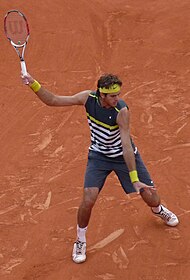
Perhaps that is where Beatriz Haddad Maia comes into the equation and provides the shining light. The 26-year-old has enjoyed somewhat of a surge in the past two years on the WTA tour. Last season she paired with Anna Danilina at the Sydney International WTA 500 event. They played a first-round match after meeting that morning. Incredibly, they went on to win, claiming the first WTA 500 trophy of either player’s career. The left-hander who has an unorthodox playing style showed that she also likes to win tournaments in a rather strange manner! A couple of weeks later they would be runners-up in the Australian Open to the incredibly experienced Barbora Krejcikova and Katerina Sinakova. In the singles, she won in Nottingham the previous year but came runner up in 2022 in Montreal to home favourite Leyhla Fernandez. Her career hasn’t been without controversy though. In her earlier years on tour, she was suspended for doping. Whether that period without competitive tennis stunted her development, we will never know.
Even so, the fact that she is effectively the face of Brazilian tennis highlights issues within the nation’s standing in tennis. Miami saw herself and Montiero (ATP ranked 81) received excellent support. It makes you wonder, if they had elite talent at the top of the game, how spectacular would it really be? A fanbase so dedicated to supporting her, imagine a grand slam contender to cheer on? What makes it more perplexing is that talent has not always been absent from Brazilian ranks.
That’s where previous world number one and Roland Garros hero Gustave Kuerten is fondly remembered. He spoke about the issue that plagues Brazil’s tennis: resources. He told Reuters “Tennis hasn’t really happened in our country, it’s not like Sweden. Players who have been playing tennis for five years and are very good, who have parents who support them, and federations who support them, sometimes even they don’t have the answers. If these players advanced we’d have extraordinary results in terms of high performance. They (the players) need to be the protagonists, you can’t wait on the governments or federations. If that was to happen it would be great. But that day has never arrived for Brazil, we haven’t lived through any virtuous cycle. It is very difficult here.”

For a country the size of Brazil it’s absolutely scandalous that the Brazilian Tennis Confederation published that there are just 212 public tennis courts (as of 2019). Previous president Luiz Inacio claimed that the sport is “bourgeois” and that anyone without a solid amount of wealth should give up the dream. Not ideal for encouraging participation, one could argue. Yet, Rafael Westrupp the President of the Brazil and South American Tennis Federations told us that a structure is in place for up-and-coming talent to shine.
The current climate of their tennis success seems to suggest otherwise. Whether it was a “politician answer” to silence the critics or genuine progress is being made will be proved in the future. Although maybe tennis woes are down to the fact that the sport just isn’t their culture. (The flamboyant crowds at all their home tournaments suggest otherwise). Or maybe it’s just a sports thing with Brazil where they put all their eggs in the football basket. Either way, it would be a shame to continue to see Brazil being effectively inactive in the tennis world as a nation the size of theirs could really add something to the sport. In terms of progress, you can only hope it’s around the corner. I wouldn’t hold my breath though.
All images Wikimedia Commons



 Beyond The Score
Leave a comment